Showing posts with label WHO KNEW?. Show all posts

"Why Does It Cost $32,093 Just To Give Birth In America?"

  • America is the most expensive nation in the world to give birth. 
  • When things go wrong – from pre-eclampsia to premature birth – costs can quickly spiral into the hundreds of thousands of dollars. 
  • While the data is limited, experts in medical debt say the costs of childbirth factor into thousands of family bankruptcies in America each year.
  • It’s nearly impossible to put a price tag on giving birth in America, since costs vary dramatically by state and hospital. But one 2013 study by the the advocacy group Childbirth Connection found that, on average, hospitals charged $32,093 for an uncomplicated vaginal birth and newborn care, and $51,125 for a standard caesarean section and newborn care.
  • Insurance typically covers a large chunk of those costs, but families are still often on the hook for thousands of dollars.
  • Another estimate from the International Federation of Health Plans put the average amount insurers paid for a vaginal birth in the US at $10,808 in 2015. That is quintuple the IFHP estimate for another industrialized nation, Spain, where it costs $1,950 to deliver a child. 
  • Even the luxurious accommodations provided to the Duchess of Cambridge for the birth of the royal family’s daughter Princess Charlotte – believed to have cost up to $18,000 – were cheaper than many births in America.
  • Despite these high costs, the US consistently ranks poorly in health outcomes for mothers and infants. The US rate of infant mortality is 6.1 for every 1,000 live births, higher than Slovakia and Hungary, and nearly three times the rate of Japan and Finland. 
  • The US also has the worst rate of maternal mortality in the developed world. That means America is simultaneously the most expensive and one of the riskiest industrialized nations in which to have children.
  • Nearly half of American mothers are covered by Medicaid, a program available to low income households that covers nearly all birth costs. But people with private insurance still regularly pay thousands of dollars in co-pays, deductibles and partially reimbursed services when they give birth. Childbirth Connection put the average out of pocket childbirth costs for mothers with insurance at $3,400 in 2013.

Read the full article in The Guardian here

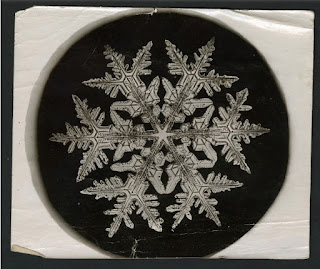
"The Man Who Revealed the Hidden Structure of Falling Snowflakes"


  • A numinous fact, as basic to childhood as George Washington’s cherry tree confession (and far more reliable), is that no two snowflakes are exactly alike. 
  • Almost as incredible...is that one individual is responsible for this...revelation, a man as deserving of a place in that pantheon of those who have revealed something we never knew before as Copernicus, Newton and Curie. 
  • Let us add his name to the list: Wilson A. Bentley.
  • Beginning in the early 1880s, Bentley...[devised] a mechanism that combined a microscope with a view camera. Using light-sensitive glass plates not unlike those that had recorded Civil War battlefields, he learned how to make extraordinarily sophisticated “portraits” of individual snow crystals.
  • Isolating individual crystals itself posed a daunting challenge—there may be 200 of them in a large snowflake. And keeping the crystals frozen and unspoiled required Bentley to work outside, using balky equipment. 
  • Bentley seemed willing to pursue his arduous work—over the years he made pictures of thousands of snow crystals—not with any hope for financial gain but simply for the joy of discovery. 
  • Nicknamed Snowflake by his neighbors, he claimed his pictures were “evidence of God’s wonderful plan” and considered the endlessly varied crystals “miracles of beauty.”
  • In 1904, Bentley approached the Smithsonian with nearly 20 years of photographs and a manuscript describing his methods and findings. But...the submission [was rejected] as “unscientific.” (Eventually, the U.S. Weather Bureau published the manuscript and many of the photographs.)
  • Avowing that “it seemed a shame” not to share the wonders he had recorded, Bentley sold many of his glass plates to schools and colleges for 5 cents apiece. He never copyrighted his work.
  • Bentley’s efforts to document the artistry of winter garnered him attention as he grew older. He published an article in National Geographic. Finally, in 1931, he collaborated with meteorologist William J. Humphreys on a book, Snow Crystals, illustrated with 2,500 of Snowflake’s snowflakes
  • Bentley’s long, frigid labors culminated just in the nick of time. The man who revealed the glittering secret of every white Christmas died that same year on December 23 at his Jericho farm.

    Read the full profile (by Owen Edwards) here. See the book here
  • Intriguing Headline of the Week: "He Tried To Hold In a Sneeze and Ended Up In the Hospital On A Feeding Tube"


    • Sneezing is an astoundingly powerful human action, blasting mucus and air from the nose and mouth at up to 100 miles per hour...That power exists whether a sneeze is held in or not.
    • “Occasionally, people will cause some damage to their eardrums or their sinuses if they stifle a very violent sneeze,” Rachel Szekely, an immunologist at Cleveland Clinic, said in an article on the health provider’s website urging people to sneeze freely and not hold back.
    • A healthy 34-year-old man living in the United Kingdom has learned that the hard way, according to a case study published Monday in the British Medical Journal. His attempt to stifle a sneeze backfired, and the force of that would-be sneeze tore through the soft tissue in his throat, rupturing part of it.
      • One day he felt a sneeze forming and did what he often did: tried to stop it. He clamped one hand over his mouth while pinching his nose.
      • While trying to hold back the sneeze, he felt a “popping sensation” in his neck, which began to swell. His voice also changed.
      • Subsequent X-rays showed that the built-up pressure from the sneeze, which needed to escape his body somehow, tore through the throat’s soft tissue when its preferred exit — his nose and mouth — were blocked. It ruptured the pharynx, the membrane-filled cavity connecting the mouth and nose with the esophagus. It also caused air bubbles to form in his neck’s soft tissue, which caused the popping sensation.
      • Fearing that a deep neck infection could form, doctors hospitalized the man, who was given a feeding tube and put on a regimen of antibiotics. He was released a week later, after the wounds in his neck healed.
    • Sneezing is the body’s way of ridding itself of potentially harmful irritants in the nose, throat or lungs. Pressure builds up in the lungs and then forcefully explodes up the esophagus and out of the nose and mouth. But if those orifices are blocked, the pressure needs to escape somehow
    • “I’ve seen patients with a ruptured eardrum or pulled back muscles, and you hear about cracked ribs,” [an otolaryngologist] told Time in 2015.
    • “By stifling a sneeze, you could push infected mucus through the eustachian tube and back into the middle ear,” Szekely said in the Cleveland Clinic article. “You can get middle ear infections because of that.

    Read the popular press article (by Travis M. Andrews) here and the case study here

    Surprising-ness: The Economics of Rotisserie Chicken


    • Americans bought 625 million rotisserie chickens at supermarkets in 2017.
    • With labor costs and competition rising, more stores are relying on rotisserie chickens to draw customers.
      • To continue selling them for $5 to $7 each, executives are working to trim supply-chain costs, cook chickens more efficiently and throw fewer of them away unsold.
    • Costco has sold rotisserie chickens for $4.99 since 2009. 
      • When a bird flu outbreak prompted higher prices for ready-to-cook chickens in 2015, Costco took a $30 million to $40 million profit hit to keep its rotisserie prices steady.
    • Commercial chicken farms can get them from hatchling to slaughter in as little as four weeks, one farmer said.
    • Most stores display their rotisserie birds under heat lamps for two to four hours, after which they start to dry out. Rather than throw those unsold birds away, some chains are deboning the meat for use in other prepared foods they sell, such as chicken salad or chicken noodle soup.
    • “With a four-hour shelf life, there’s not a lot of room to make mistakes,” said Russ Richardson, Kroger Co.’s head of deli.
    • The rotisserie craze started in the early 1990s when Boston Chicken, now Boston Market, opened drive-through restaurants selling chicken dinners and sides. Families liked the convenience of a meal that was seen as cheaper and healthier than fast food. Costco and Kroger began selling rotisserie chickens in 1994.
    • Nothing else from the ’90s is still this popular today,” said Mariano’s Mr. Fitzgerald.

    Learn more (from Annie Gasparro) here and here

    "Why Does a Vicuña Jacket Cost $21,000?"

    image

    [SB10001424127887323808204579087580304954434]


  • If you're perfectly happy with fine cashmere, all this might seem like a lot of trouble to go through for an extra layer of luxury. But come into contact with vicuña and you might, for a moment, think seriously about blowing your children's college funds.

  • Vicuña coats and jackets have an unparalleled lightness that makes you feel almost buoyant. And then there is the softness. "People love vicuña for the touch," said Mr. Loro Piana. "It's the finest hair on the planet." The diameter of its fiber is 12.5 microns, he explained, while the best cashmere is 13.5 microns and run-of-the-mill cashmere ranges from 14.5 to 17.5.

  • Incan royalty wore it exclusively. In the 1500s, King Philip II of Spain slept under vicuña blankets. Last century, it was favored by wealthy entertainers: Greta Garbo wore vicuña, as did Nat King Cole and Marlene Dietrich.

  • Each year, only 13,000 to 17,500 pounds of vicuña become available to Loro Piana, a major purveyor of vicuña garments—a fraction of the 22 million pounds of cashmere the company works with annually. The Italian tailoring house Kiton makes only about 100 vicuña pieces a year; an off-the-rack sport coat costs at least $21,000, while the price of a made-to-measure suit starts at $40,000. A single vicuña scarf from Loro Piana is about $4,000. Ermenegildo Zegna produces just 30 vicuña suits a year. Each is numbered, and the most affordable model goes for $46,500.

  • The vicuña, a camelid that looks like a smaller and more elegant llama, is found primarily in the Peruvian and northern Argentine Andes. For centuries, it was poached for its valuable cinnamon-colored coat, a marvel of evolution that, although unusually light and fine, keeps the animals warm in the freezing altitudes above 15,000 feet. By the 1960s, the vicuña population had fallen from an estimated two million in the 16th century to roughly 10,000, and Peru took measures to protect vicuñas from extinction, banning the killing and trade of the animals.

  • Learn more about vicuña and the vicuña here.   

    Intriguing Headline of the Month: "When Lettuce Was a Sacred Sex Symbol"


    "But in Ancient Egypt around 2,000 B.C., lettuce was not a popular appetizer, it was an aphrodisiac, a phallic symbol that represented the celebrated food of the Egyptian god of fertility, Min..."

    Learn all about it (in Smithsonian Magazine) here

    Who Knew: "Summer Is the Real Season for Bad Colds, Not Winter"

    How to get rid of a summer cold

  • Colds in summertime can last for weeks, at times seemingly going away and then suddenly storming back with a vengeance, infectious-disease experts say. A winter cold, by contrast, is typically gone in a few days.
  • The reason for the difference: Summer colds are caused by different viruses from the ones that bring on sniffling and sneezing in the colder months. And some of the things people commonly do in the summer can prolong the illness, like being physically active and going in and out of air-conditioned buildings.
  • "A winter cold is nasty, brutish and short," says Bruce Hirsch, infectious-disease specialist at North Shore University Hospital in Manhasset, N.Y. "But summer colds tend to linger. They can go on for weeks and reoccur."

  • Learn more (from Angela Chen in the WSJ) here

    "Red Cross For Rover: Inside America's Canine Blood Banks"

    At Blue Ridge Veterinary Blood Bank in Purcellville, Va., dog holder Diane Garcia snuggles with one-year-old Doberman Leon as phlebotomist Rebecca Pearce taps his jugular vein to start the blood draw. Leon's "mom," Carrie Smalser, feeds him peanut butter, to keep him happily distracted and calm.

    • America is facing a blood shortage — a shortage of dog blood. 
    • Whether Fido tangles with a car and loses, or Barky contracts a blood-damaging disease, dogs — like their people — sometimes need transfusions. 
    • And while there's no centralized Red Cross for Rover, there are a few commercial canine blood banks across the country, and many veterinary schools do their own blood banking.
    • At Blue Ridge Veterinary Blood Bank in Purcellville, Va., it's all-volunteer.
    • At about 26 sites across Virginia, Maryland and West Virginia, teams from Blue Ridge collect blood from regular donor dogs that donate every six weeks or so.
    • While the dogs' owners are clearly volunteering — both their time and the gasoline it takes to bring their pups in — phlebotomist Rebecca Pearce insists the dogs volunteer as well. The dogs are rewarded with treats and praise throughout the process, and Pearce practices a few times before taking blood to make sure the animals are comfortable.

    Listen to the fascinating, 5-minute story (from NPR's All Things Considered) here

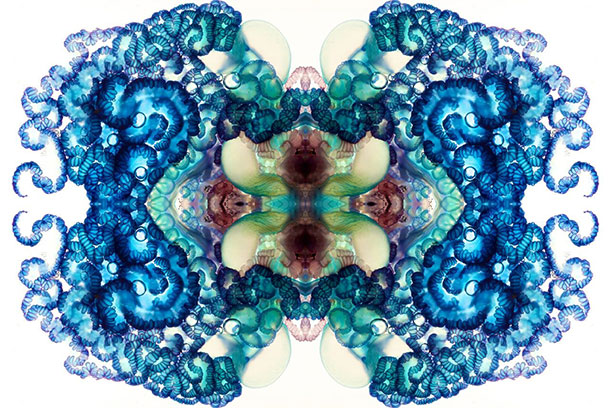
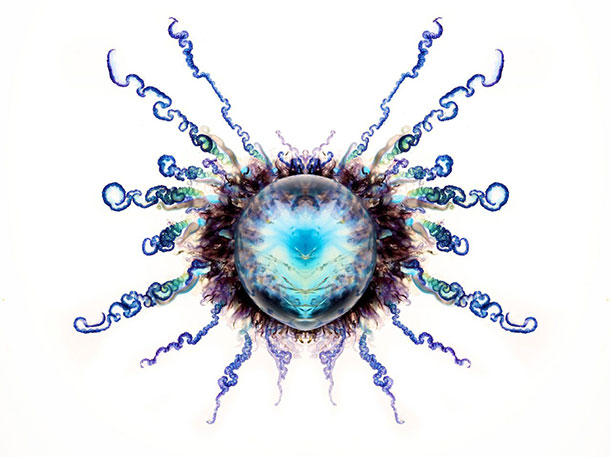
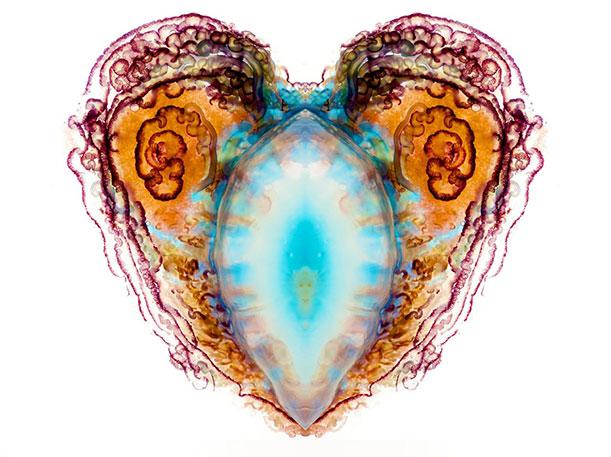
    Beautiful, right?


    What are they?

    • A [Portuguese] man-of-war, if you’ve never encountered one, is a bit like a jellyfish. It is a transparent, gelatinous marine creature with stinging tentacles... 
    • Without their own means of locomotion, the little-studied men-of-war are at the whim of tides and currents.
    • Scientists do not know how men-of-war breed or where their migrations take them because they cannot attach tracking devices to them, but, the animals wash up on shore in Florida from November to February. They turn from purple to deep reds the longer they are beached.

    Learn more here and see more of Aaron Ansarov's striking photos here.

    "Why is Y sometimes a vowel?"

    Why so wishy-washy?

    A, E, I, O, U, and sometimes Y. You might have learned it as a chant, a song, or a simple declaration, but this is how you learned the vowels of English. You may have wondered, why is Y so unsure of itself? Can't we just decide what it is? Why is Y a "sometimes" vowel?
    Because writing is not the same thing as speech. While we casually refer to letters, which are written symbols, as vowels or consonants, the concepts of vowel and consonant properly belong to the domain of speech. In general terms, a consonant is a speech sound formed by some kind of constriction or impeding of air flow through the vocal tract, and a vowel lets the air flow freely through. The letter Y can stand for either of these types of sounds.
    In "yes," Y is representing a consonant, and in "gym" it is representing a vowel.

    Learn more here.

    "11 Historical Figures Who Were Really Bad At Spelling"

    Sorry, Hemingway, your work is moving, not "moveing."


    Fun little article. Included in the list: Jane Austin (hard to believe!), George Washington, Winston Churchill, Agatha Christie, Einstein, and Hemingway (pictured above). Read it here

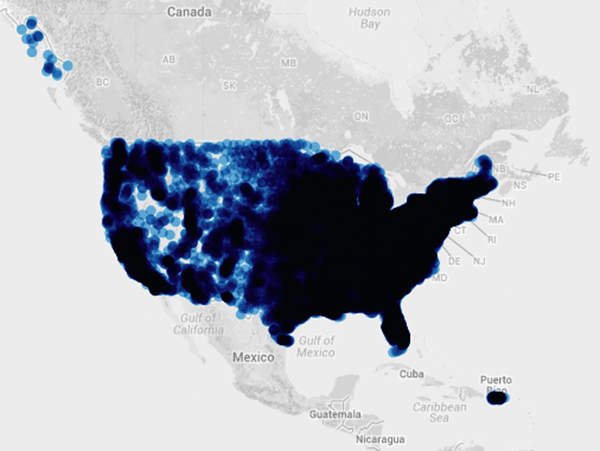
    "There’s Hope: America’s Libraries Outnumber McDonald’s & Starbucks"

    library map plot

    • America is home to about 17,000 public libraries, according to statistician Justin Grimes with the Institute of Museum and Library Sciences. 
    • Grimes plotted library locations on Google Maps to show their density and outreach. 
    • In the shadow of free knowledge, Starbucks operates [ONLY] about 11,000 stores nationwide, and McDonald’s slings burgers in about 14,000. 

    I read it here

    What the What: "'Eyeball Licking' Trend Is Giving All the Japanese Kids Pink Eye"

    It has led to a surge in cases of eye infections, such as conjunctivitis, and can even cause blindness

    'Eyeball Licking' Trend Is Giving All the Japanese Kids Pink Eye


  • A Japanese website has finally exposed the real reason why so many Japanese kids have been showing up at school wearing eye patches: They've contracted pink eye after engaging in the intimate act known as "eyeball licking." 

  • Which is exactly what it sounds like: One person spreads their eyelids wide, inviting the other person to lick their eyeball.

  • Learn more (if you dare) here and here.

    What the What: "Wonder Triplets...Born EIGHT Days Apart"

    Sarita Saltmarsh

    • Her triplets are now being hailed as medical marvels after arriving an incredible eight days apart.
    • Mrs Saltmarsh unexpectedly went into labour on February 28, with husband Colin having to deliver their first daughter...at home.
    • The couple knew from scans that they had been blessed with triplets. So within minutes, four ambulances had pulled up outside - one for each triplet and one for mum. But in a bizarre twist, the other two babies stayed put.
    • For eight days Mrs Saltmarsh waited in hospital until about 24 hours into a second labour she gave birth to [another girl and a boy].
    • Medical experts say the phenomenon is so rare that many obstetricians are not even aware it can happen.
    • Most multiple births come within 30 minutes of each other if delivered naturally, or just one to two minutes apart if they are caesarean.

    Read more here.

    Who Knew?


    Why Japan is Obsessed with Kentucky Fried Chicken on Christmas:
    Christmas isn’t a national holiday in Japan—only one percent of the Japanese population is estimated to be Christian—yet a bucket of “Christmas Chicken” (the next best thing to turkey—a meat you can’t find anywhere in Japan) is the go-to meal on the big day. And it’s all thanks to the insanely successful “Kurisumasu ni wa kentakkii!” (Kentucky for Christmas!) marketing campaign in 1974.
    When a group of foreigners couldn’t find turkey on Christmas day and opted for fried chicken instead, the company saw this as a prime commercial opportunity and launched its first Christmas meal that year: Chicken and wine for 834 2,920 yen($10)—pretty pricey for the mid-seventies. Today the christmas chicken dinner (which now boasts cake and champagne) goes for about 3,336 yen ($40).
    And the people come in droves. Many order their boxes of  ”finger lickin’” holiday cheer months in advance to avoid the lines—some as long as two hours.
    From the December 2012 issue of Smithsonian Magazine. Read all about it here.

    Who Knew?


    Canadian Teens Lead Developed World in Cannabis Use: Unicef Report

    • This is the second time in a row that the WHO study has ranked Canadian teenagers as the highest cannabis users...
    • The report released last week shows that 28 per cent of [Canadian] 15-year-olds admitted to having used cannabis in the past year. 
    • The figure comes from a World Health Organization (WHO) study...which surveyed teenagers across 29 developed nations, including more than 15,000 in Canada.

    Read the article here

    "The Strangest Tradition of the Victorian Era: Post-Mortem Photography"

    • Painting dead people was common for centuries, so it's no surprise that, in the Victorian Era, post-mortem photos also came into fashion.
    • Because of the high childhood and infant mortality rate, this was a significant way [of] memorializing lost family members. In some cases, this was the only photograph that depicted the entire family together.
    You can view a fascinating collection of photos here

    "Giant African Land Snails Invading Miami: 117,000 Caught So Far"


    Who knew?
    • South Florida is fighting a growing infestation of one of the world's most destructive invasive species: the giant African land snail, which can grow as big as a rat and gnaw through stucco and plaster.
    • More than 1,000 of the mollusks are being caught each week in Miami-Dade 
    • The snails attack "over 500 known species of plants ... pretty much anything that's in their path and green"...
    • A typical snail can produce about 1,200 eggs a year and the creatures are a particular pest in homes because of their fondness for stucco, devoured for the calcium content they need for their shells.
    • The snails also carry a parasitic rat lungworm that can cause illness in humans, including a form of meningitis

    Read more (gory details) here.

    On the Menu This Easter in Newfoundland: Seal Flipper Pie


    A fascinating tale of history and culture from Smithsonian Magazine:

    • In Newfoundland, having a “scoff” (the local word for “big meal”) includes some pretty interesting food items unique to the region: scrunchions (fried pork fat), cod tongues and fishcakes, for example. 
    • But perhaps the least appetizing dish, which is traditionally made during the Lenten season—specifically on Good Friday and Easter—is seal flipper pie
    • The meal, which originated in the Canadian provinces of Newfoundland and Labrador, tastes as strange as it sounds. The meat is dark, tough, gamey and apparently has a flavor similar to that of hare (appropriate for America’s favorite Easter mascot, no?).
    • While it might be difficult to imagine eating a meal made from something as cute and cuddly as a seal, the dish has a history based in survival. 
      • Seals were especially important to Inuit living on the northern shores of Labrador and Newfoundland dating back to the early 18th century when seal meat, which is high in fat protein and vitamin A, was a staple in the early Arctic-dweller’s diet... 
      • Seal hunters used all parts of the seal from their pelts to their fat to light lamps (at one time, London’s street lights were fueled with seal oil), but they couldn’t profit off of the flippers
      • To save money and to use as much of the animal as possible, they made flipper pie. As the hunting industry grew, seal meat became a major resource for oil, leather and food for locals after the long, harsh winter in these regions.
    • According to Annie Proulx’s best-selling 1993 novel The Shipping News, which takes place in...Newfoundland, the dish is quite tasty, but mostly evokes fond memories for the Newfoundlander characters.

    For those of you who have access to two (2) seal flippers, here is a recipe for a traditional pie. 

    "She Sees the World Upside Down"


    Serbian Woman’s Rare Brain Condition:
    • A Serbian woman who sees the world upside down has neurology experts at MIT and Harvard scratching their heads.
    • Bojana Danilovic, 28, has a rare condition called "spatial orientation phenomenon" where a jumbled connection in her brain flips what she perceives...
    • "It may look incredible to other people but to me it's completely normal"